


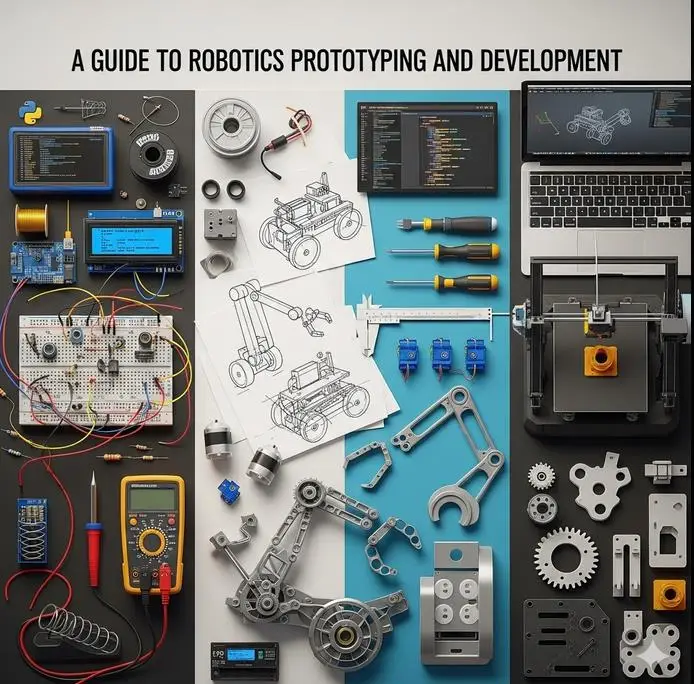
Understanding Robotics System Architecture
Before diving into specific design aspects, it’s crucial to understand the fundamental architecture that underlies all robotic systems. This architecture provides a framework for organizing the complex interactions between mechanical, electrical, and software components that make robots functional.
Core Subsystems and Their Integration
Every robot, regardless of complexity, consists of several core subsystems that must work together seamlessly. The mechanical subsystem provides the physical structure and movement capabilities, including frames, joints, actuators, and end effectors. The electrical subsystem encompasses power management, motor control, sensing, and communication systems. The software subsystem includes control algorithms, user interfaces, and communication protocols.
The challenge in robotics lies not in designing individual subsystems, but in achieving effective integration between them. Mechanical constraints affect electrical component placement, electrical power requirements influence mechanical design choices, and software capabilities determine the feasibility of both mechanical and electrical design decisions. This interdependency requires a systems thinking approach from the earliest stages of development.
Our experience at Nuts and Boltz has shown that successful robotics projects begin with a clear understanding of these interactions and a development process that considers all subsystems simultaneously rather than sequentially.
Defining Robot Capabilities and Requirements
The first step in any robotics project involves clearly defining what the robot needs to accomplish and under what conditions. This requirements analysis must consider not only functional capabilities but also operational constraints, environmental conditions, and performance specifications.
Functional requirements define what tasks the robot must perform, while non-functional requirements specify how well it must perform them. For example, a warehouse automation robot might need to lift 50kg loads (functional) with 99.9% reliability (non-functional) in temperatures ranging from 0°C to 40°C (environmental). These requirements drive every subsequent design decision and provide criteria for evaluating prototype performance.
Mechanical Design and Motion Systems
The mechanical subsystem forms the foundation of any robot, providing the structure that supports all other components and the mechanisms that enable physical interaction with the environment. Effective mechanical design balances strength, weight, precision, and manufacturability while accommodating the requirements of electrical and software subsystems.
Structural Design and Materials Selection
Robot structural design must consider static loads from components and payloads as well as dynamic loads from motion and environmental forces. Material selection affects not only strength and weight but also manufacturing methods, cost, and long-term reliability. Common materials include aluminum extrusions for frames, steel for high-load applications, and engineered plastics for lightweight components.
Modern robotics increasingly leverages 3D printing technology for custom components, enabling complex geometries that would be difficult or impossible to machine. This capability is particularly valuable for creating integrated assemblies, custom mounting brackets, and lightweight structural components optimized for specific load cases.
The integration of 3D printed components with traditional manufacturing methods allows for optimized designs that combine the strengths of different manufacturing processes. Critical structural elements might be machined from metal for maximum strength, while complex geometric features are 3D printed for optimal performance and reduced assembly complexity.
Actuators and Motion Control
The choice of actuators fundamentally determines a robot’s capabilities and characteristics. Electric motors offer precise control and easy integration with electronic control systems, making them the most common choice for robotics applications. Servo motors provide position feedback for precise positioning, while stepper motors offer open-loop control for applications where feedback isn’t critical.
Hydraulic and pneumatic actuators provide higher power-to-weight ratios than electric motors but require more complex support systems and are typically used in specialized applications. The selection process must consider force and torque requirements, speed and precision needs, power consumption, and integration complexity.
Transmission systems, including gears, belts, and lead screws, modify actuator output to match application requirements. Gear ratios affect both torque multiplication and positioning precision, while transmission efficiency impacts overall system power consumption and heat generation.
Electronics Integration and Control Systems
The electronics subsystem serves as the brain and nervous system of any robot, providing intelligence, sensing, and control capabilities. This subsystem must process sensor inputs, execute control algorithms, manage power distribution, and communicate with external systems—all while maintaining real-time performance and reliability.
Microcontroller and Processing Selection
The choice of processing platform affects every aspect of robot performance and development complexity. Simple applications might use basic microcontrollers like Arduino platforms, while complex robots require more powerful processors capable of running sophisticated algorithms and managing multiple communication channels simultaneously.
Single-board computers like Raspberry Pi provide full operating system capabilities and high-level programming languages, making them suitable for applications requiring complex decision-making, image processing, or network connectivity. However, they typically require additional microcontrollers for real-time motor control and sensor interfacing.
Our electronics services team specializes in selecting and integrating processing platforms that balance computational requirements with power consumption, cost, and development complexity. This includes custom PCB design for applications requiring specialized interfaces or compact packaging.
Sensor Integration and Data Processing
Robots depend on sensors to understand their environment and monitor their own state. Common sensors include encoders for position feedback, IMUs for orientation sensing, cameras for vision systems, and proximity sensors for collision avoidance. Each sensor type requires specific interface electronics and processing algorithms.
Sensor fusion combines data from multiple sensors to create more accurate and robust environmental understanding. For example, combining wheel encoders with IMU data can provide more accurate position estimation than either sensor alone. However, sensor fusion requires sophisticated algorithms and sufficient processing power.
The physical integration of sensors affects both performance and reliability. Sensor placement must consider mechanical protection, electromagnetic interference, and environmental factors while maintaining access to the phenomena being measured.
Power Management and Distribution
Power management represents one of the most critical aspects of robotics design, affecting everything from operational time to safety and reliability. Robot power systems must supply multiple voltages to different subsystems while managing varying load conditions and protecting against fault conditions.
Battery selection involves balancing energy density, power delivery capability, charging characteristics, and safety considerations. Lithium-ion batteries offer high energy density but require sophisticated charging and protection circuits, while lead-acid batteries are more robust but heavier and less efficient.
Power distribution systems must include appropriate fusing, switching, and regulation to ensure stable operation under varying load conditions. Motor controllers, in particular, can create significant power demands and electrical noise that must be properly managed to prevent interference with sensitive electronics.
Software and Algorithm Development
The software subsystem transforms hardware capabilities into intelligent behavior, implementing control algorithms, user interfaces, and communication protocols. Effective software architecture must balance performance, maintainability, and flexibility while providing the real-time responsiveness required for robotics applications
Control System Architecture
Robot control systems typically implement hierarchical architectures with low-level motor control, mid-level behavior coordination, and high-level planning and decision-making. This layered approach allows for modular development and testing while ensuring that critical real-time functions maintain appropriate performance.
Real-time operating systems (RTOS) provide deterministic timing for critical control loops while supporting higher-level functions like user interfaces and network communication. Popular robotics frameworks like ROS (Robot Operating System) provide standardized interfaces and tools for complex robot development but may be overkill for simple applications.
Control algorithms range from simple PID controllers for motor positioning to sophisticated machine learning algorithms for complex decision-making. The selection of appropriate algorithms depends on application requirements, available computational resources, and development timeline constraints.
Programming and Development Tools
The choice of programming languages and development tools significantly impacts development productivity and system performance. Low-level functions often require C or C++ for optimal performance, while high-level functions might use Python or other interpreted languages for rapid development and easier maintenance.
Simulation and testing tools enable algorithm development and validation before hardware integration, reducing development time and improving reliability. These tools range from simple kinematic simulators to complex physics-based environments that model realistic robot behavior in virtual worlds.
Version control and collaborative development practices become increasingly important as robotics projects grow in complexity and team size. Proper development methodologies help manage the complexity of integrating mechanical, electrical, and software components developed by different team members.
Prototyping and Manufacturing Strategies
The transition from concept to physical prototype requires careful planning and execution across multiple manufacturing domains. Modern prototyping approaches leverage rapid manufacturing techniques to accelerate development cycles while providing pathways to volume production.
Rapid Prototyping Approaches
3D printing has revolutionized robotics prototyping by enabling rapid iteration of mechanical components. Complex geometries that would require extensive machining can be produced overnight, allowing for quick testing and refinement of mechanical designs. Our rapid prototyping services support everything from initial concept models to functional end-use parts.
However, 3D printing isn’t suitable for all components. High-stress structural elements, precision bearings, and electrical contacts typically require traditional manufacturing methods. Successful prototyping strategies combine 3D printing for custom components with off-the-shelf parts for standard functions.
Electronics prototyping has similarly benefited from advances in rapid PCB fabrication and assembly services. Custom control boards can be designed, fabricated, and assembled within weeks, enabling rapid iteration of electronics designs. Modular development approaches using standardized interfaces can further accelerate prototyping by allowing subsystems to be developed and tested independently.
Integration and System Testing
Robot integration represents one of the most challenging phases of development, where individual subsystems must work together to achieve system-level functionality. This process often reveals interface issues, timing problems, and performance bottlenecks that weren’t apparent during subsystem development.
Systematic integration approaches start with basic functionality and gradually add complexity, testing at each stage to isolate and resolve issues. This methodology helps identify problems early when they’re easier to fix and provides confidence that each integration step is successful before moving to the next level.
System-level testing must validate not only functional performance but also reliability, safety, and user experience aspects. This includes stress testing under extreme conditions, long-term reliability testing, and user acceptance testing with actual operators.
Advanced Features and Capabilities
Modern robotics increasingly incorporates advanced features that enhance capability and usability. These features often require sophisticated integration of multiple technologies and represent opportunities for differentiation and competitive advantage.
Vision and Perception Systems
Computer vision enables robots to understand and interact with their environment in sophisticated ways. Basic vision systems might use simple object detection for navigation or sorting, while advanced systems can perform complex scene understanding and manipulation planning.
Vision system implementation requires careful integration of cameras, lighting, processing hardware, and software algorithms. Camera selection must consider resolution, frame rate, and spectral sensitivity requirements, while lighting design ensures consistent image quality under varying conditions.
The processing requirements for vision systems can be substantial, often requiring dedicated graphics processing units (GPUs) or specialized vision processing chips. This adds complexity to the electronics design and power management systems.
Connectivity and IoT Integration
Modern robots increasingly require connectivity for remote monitoring, control, and data collection. This connectivity enables fleet management, predictive maintenance, and continuous improvement through operational data analysis.
Connectivity implementation must consider security, reliability, and performance requirements. Industrial applications might use wired Ethernet for maximum reliability, while mobile robots might require wireless solutions with appropriate failover mechanisms.
IoT integration enables robots to participate in larger automated systems and share data with enterprise systems. This requires careful attention to data formats, communication protocols, and security considerations.
Testing, Validation, and Quality Assurance
Comprehensive testing and validation ensure that robots perform safely and reliably under all intended operating conditions. This process must verify both individual subsystem performance and integrated system behavior.
Performance Testing and Optimization
Performance testing validates that robots meet all specified requirements under nominal and extreme conditions. This includes functional testing of all capabilities, performance testing under maximum loads, and endurance testing over extended operation periods.
Environmental testing exposes robots to temperature extremes, humidity, vibration, and other environmental factors they might encounter during operation. This testing often reveals design weaknesses that must be addressed before production.
Optimization based on testing results can significantly improve robot performance and reliability. This might involve mechanical design changes to reduce weight or improve stiffness, electronics modifications to improve power efficiency, or software algorithm improvements to enhance performance.
Safety and Compliance Considerations
Robot safety requires attention to mechanical hazards, electrical safety, and behavioral safety. Mechanical hazards include sharp edges, pinch points, and high-force actuators. Electrical safety involves proper grounding, isolation, and protection against shock hazards.
Behavioral safety ensures that robots respond appropriately to unexpected situations and fail safely when problems occur. This requires sophisticated software architecture with appropriate sensors and failsafe mechanisms.
Regulatory compliance varies by application and market but may include electrical safety standards, electromagnetic compatibility requirements, and industry-specific regulations. Early consideration of these requirements prevents costly redesigns later in development.
Real-World Applications and Case Studies
Our experience at Nuts and Boltz spans a wide range of robotics applications, each presenting unique challenges and opportunities. These real-world examples demonstrate the principles and practices discussed throughout this guide.
Industrial Automation Solutions
Industrial robots must operate reliably in demanding environments while maintaining precise performance over millions of cycles. These applications typically prioritize reliability and performance over cost, enabling the use of high-quality components and sophisticated control systems.
One recent project involved developing a custom pick-and-place robot for electronics assembly. The robot required sub-millimeter positioning accuracy while operating at high speeds for maximum throughput. The solution combined precision servo motors with advanced vision systems and sophisticated motion control algorithms.
Service and Consumer Robotics
Service robots operate in human environments and must balance performance with safety, cost, and user experience considerations. These applications often require more sophisticated sensing and decision-making capabilities than industrial robots but with tighter cost constraints.
A recent service robot project involved developing an automated cleaning robot for commercial spaces. The robot required autonomous navigation, obstacle avoidance, and user-friendly operation. The solution integrated multiple sensor types with machine learning algorithms for intelligent behavior.
Future Trends and Emerging Technologies
The robotics field continues to evolve rapidly, driven by advances in artificial intelligence, sensor technology, and manufacturing methods. Understanding these trends helps inform design decisions and strategic planning for robotics development projects.
Artificial Intelligence Integration
AI and machine learning are increasingly being integrated into robotics applications, enabling more sophisticated decision-making and adaptive behavior. However, these technologies require significant computational resources and specialized expertise for successful implementation.
Edge computing solutions are making AI more accessible for robotics applications by providing specialized processors optimized for machine learning workloads. These solutions enable sophisticated AI capabilities while maintaining the real-time performance required for robotics applications.
Collaborative Robotics
Collaborative robots (cobots) designed to work safely alongside humans represent a growing market segment. These robots require sophisticated safety systems and user interfaces while maintaining cost-effectiveness for widespread adoption.
The development of collaborative robots requires particular attention to safety systems, force limiting, and intuitive programming interfaces. These requirements often drive design decisions throughout the mechanical and electronics domains.
Partnering for Robotics Success
Successful robotics development requires expertise across multiple engineering disciplines and access to advanced prototyping and manufacturing capabilities. While some organizations have internal capabilities across all required domains, many benefit from partnering with experienced development teams.
At Nuts and Boltz, our integrated approach combines electronics design, mechanical engineering, and advanced manufacturing capabilities under one roof. This integration eliminates communication gaps between disciplines and enables optimized designs that consider all system aspects simultaneously.
Our portfolio of robotics projects demonstrates successful outcomes across diverse applications and industries. Whether you need support for specific development phases or complete end-to-end project management, our team has the expertise and capabilities to help achieve your robotics development goals.
Conclusion: Building the Future with Robotics
Robotics development represents one of the most exciting and challenging areas of modern engineering, combining multiple disciplines to create intelligent machines that can enhance human capabilities and improve quality of life. Success requires not only technical expertise but also systematic approaches to development, testing, and integration.
The methodologies and practices outlined in this guide provide a foundation for successful robotics development projects. However, the complexity and rapid evolution of the field mean that staying current with new technologies and best practices is essential for continued success.
Whether you’re developing your first robot prototype or looking to enhance existing capabilities, the journey from concept to functional robot is both challenging and rewarding. With proper planning, systematic execution, and the right development partners, your robotics vision can become reality.
Ready to bring your robotics concept to life? Contact our engineering team to discuss your project requirements and discover how our comprehensive robotics development services can help transform your ideas into innovative, functional robots. Call +91-70111-68080 or visit our facility in Sector 2, Noida to explore the possibilities of advanced robotics development.
Transform your robotics vision into reality with expert engineering support. Our experienced team at Nuts and Boltz combines mechanical design, electronics expertise, and advanced manufacturing to deliver successful robotics projects. Schedule a consultation today and take the first step toward robotics innovation.
